Thursday, March 18, 2021

Cissy Strut Jam: Jeff Middleton (drums), Emily Wallace (bass), Brad Wallace (guitar)


One of our mid-week jams to our version of  The Meters 'Cissy Strut' 

Emily Wallace (bass)
Jeff Middleton (drums)
Brad Wallace (guitar)

Friday, January 22, 2021

Last Bass of 2020: Fender Player Fretless Jazz Bass (Pau Ferro Fingerboard)


The last bass I acquired in 2020 was the Fender Player Fretless Jazz bass with Pau Ferro fingerboard in 3 color sunburst. If you've read any of my previous posts about fretless basses, you'll know that I have sold most of the ones I've bought in the past...with the exception of my Gold Tone Microbass

I've owned two other full scale fretless basses (aside from upright basses) and both were a little disappointing in the long run for a variety of reasons. They either didn't sound like a fretless bass at all or the pickups weren't right. So, I swore off fretless basses for a long while. 

Then, last fall, I ran across Fender's Player Fretless Jazz bass. It was affordable at $699, but not so cheap that I questioned its quality. (I only say this because I once bought an Ibanez SR300 fretless about 11 years ago. It was only $300, but it was an Ibanez so I didn't question the quality like I would've with another brand. But, as I write about in my review on that bass, I ended up selling it because it didn't meet my expectations.)

Once the new Fender fretless arrived, the first thing I noticed was the strings. Fender actually put flatwound strings on this bass. The other fretless basses I had bought (other than the Gold Tone) had come with roundwound strings on them (to save money, I know). I had already ordered some Fender flatwound strings before I ordered the bass because I figured they wouldn't send the bass with flatwounds on it. 

(This may not seem like a big deal, but if you play with flatwounds, you know the expense. It's enough to pay hundreds or thousands of dollars for a new bass...then you have to spend another $40+ on strings to replace the roundwounds that come on it.)

After a little minor tweaking of the action, this bass was ready to go right out of the box--not something typical for the other Fender basses I've bought in the past. 

And, low and behold, this fretless sounded like a fretless--along with having that smooth jazz bass tone too. 

I was a little concerned about the neck before playing it because I'm used to the thinner necks that you normally get on the short scale basses that I typically play, but I've not had any problems with this bass. It's not one I could play for hours on end--mostly because I'm not comfortable playing long scale basses for long periods of time anymore. My shoulder tends to start hurting, which is why I switched to short scales in the first place. 

Overall, I'm pleased with this fretless--and it's nice to have a jazz bass again after all these years. 


Player Fretless Jazz Bass Pau Ferro Fingerboard Specifications:

Neck
  • Shape: Modern C
  • Wood: Maple
  • Neck joint: Bolt-on
  • Scale length: 34 in.
  • Truss rod: Standard
  • Finish: Satin
Pickups
  • Active or passive pickups: Passive
  • Pickup configuration: SS
  • Middle: Single-coil Alnico V
  • Bridge: Single-coil Alnico V
  • Brand: Fender
  • Series or parallel: Parallel
Fretboard
  • Material: Pau Ferro 
  • Radius: 9.5 in.
  • Fret size: Extra-jumbo
  • Number of frets: Fretless
  • Inlays: Dot
  • Nut material: Synthetic bone
  • Nut width: 1.5 in. (38.1 mm)
Body
  • Cutaway: Double cutaway
  • Construction: Solidbody
  • Body wood: Alder
  • Top wood: Alder
  • Body finish: Gloss
  • Orientation: Right handed
Controls
  • Control layout: Volume 1, volume 2, master tone
Hardware
  • Bridge type: Fixed
  • Bridge design: 4-Saddle adjustable
  • Tuning machines: Open-geared
  • Color: Nickel/chrome
Other
  • Number of strings: 4
  • Pickguard: Yes
  • Special features: Pickups
  • Case: Sold separately
  • Country of origin: Mexico

Sunday, October 18, 2020

NEW GEAR (June 2020): Ibanez SRMD200 Mezzo Bass (medium scale)


Fast forward to June 2020. I had seen the Ibanez Mezzo bass every time I went to Guitar Center and noticed that it was a shorter scale bass too. Technically, it's a medium scale bass (32" inch scale length), something you don't see that often. 

I rarely buy instruments from the Guitar Center sales floor (for reasons I won't go into), so I found this one online on Reverb through Cream City Music. AND, I got it in a bundle deal for the same price I would pay for only the bass at Guitar Center. 

Ibanez basses are known for their quality (in every price range), so I didn't worry that the low price would mean a low-quality instrument. This bass plays and sounds great right out of the box. Plus, with the bundle deal, I got a nice Gator gig bag, a cable, and cleaning cloth. I chose the Sea Foam Pearl Green color, but it's more of a blue color in person. There are several color options, however, if greens and blues aren't your preferred colors. 


"A departure from the usual SR Bass design, the Mezzo features a Poplar body, 32" medium scale neck, and a B10 bridge for plenty of tuning stability and adjustable intonation. With its Dynamix pickups and Ibanez Custom Electronics 2-band EQ, you have full control over your amplified tone. This is an excellent bass all around for the beginner or experienced musicians." Cream City Music description on Reverb. Buy the bundle here for $299.


See the specs from Ibanez here. 


NEW GEAR (May 2020): VINTAGE 1976 Fender Musicmaster Bass


    After my disappointment with the Ibanez Artcore bass, I found an amazing little gem at the Shoals Guitar Boutique (Muscle Shoals, AL) when I took the Ibanez up there to place on consignment. 

I spotted the short scale Fender Musicmaster right away--mostly because there are only a few basses in the shop and because I can spot a short scale bass from a mile away at this point. It was my husband's turn to buy some gear, but he didn't find anything he was in love with (in his price range, anyway), so my 16-year-old son (who is an avid guitarist now) and I took home vintage gear instead. 

This 1976 American-made Fender Musicmaster short scale bass has an alder body and maple neck...and is ridiculously comfortable to play. The action was set low (how I like it) and it already had flat wound strings on it, so I was set. It also came with its original case, so that was a plus too. Oh, and I payed less than $1000 for it--so there's that. 

Over five months later, I'm still loving this bass. It plays a lot like my Fender Mustang bass, but is lighter in weight. Technically, this is my first vintage bass, so I plan on hanging on to it forever. 


NEW GEAR (March 2020): Ibanez AGB260 Semi-Hollow Body Bass (Short Scale)


Like everyone else on the planet, I've had a lot going on since March, so I'm just now updating my blog. I bought an Ibanez AGB260 Bass (30" short scale) in March, mostly because I didn't have a semi-hollow body bass in my collection, and this one happened to also be a short scale bass. 

After replacing the round wound strings with flat wounds, I could start getting an idea about this bass' potential. I played it off and on for a month or so before deciding I didn't like it-- at all. 

Out of all my short scale basses (12 total, to date), this is the ONLY one I haven't liked.

 Here are the reasons: 1) The large body hurts my right arm when I'm sitting (which is mostly how I play). 2) The neck is wider than I like and my fretting hand starts cramping quickly when I play complicated bass lines. 3) It really doesn't sound that great--even with D'Addario Chrome flat wound strings on it. 

Those are all deal breakers for me, so I'm attempting to sell it at the Shoals Guitar Boutique in Muscle Shoals, AL (as of May 2020), but no bites yet.

This bass is beautiful...and I really wish that I didn't hate everything else about it, but there it is. 

Specs from Ibanez can be found here. 


Wednesday, February 26, 2020

Are Short-Scale Basses Having a Moment? 7 Awesome Options | Reverb

New Gear for Valentines Day: Ibanez Talman TMB30 (short scale) Bass


For Valentines Day, I picked up an Ibanez Talman TMB30 short-scale bass in mint green (one of my favorite colors). Other than the Mikro bass that they make (which my daughter has), I didn't realize they made any other short-scale basses until I saw this one on a Youtube video.

My first bass was an Ibanez SDGR SR500 (with Bartolini pickups) and almost every Ibanez bass I've bought has been incredible right out of the box. In fact, for several years, I only played Ibanez basses because of how fast the necks were (in the SDGR series) and the quality of the instruments in general.

I bought multiple Fender basses that I was very displeased with--quality-wise--and all of them cost more than my Ibanez basses. (Until I bought my Fender Mustang bass a couple years ago, I had lost all faith in Fender.)

The Ibanez Talman Series basses start at the TMB30 model and end at the TMB2000--ranging in price from $189.99 to $1599.99


I bought mine during a sale for $179.99. I've mentioned this several times before, but up until a few ago, I wouldn't have considered buying an instrument this cheap--for the most obvious reason: you get what you pay for (usually) when it comes to instruments.

I've played basses this cheap before and 99% of the time, the quality (and sound) just didn't cut it. After starting my short-scale bass collection, however, I've started shifting my way of thinking. Does that mean that all cheap basses are quality? That's a big heck no, but some are worth taking a second glance at.

Ibanez is known for producing quality instruments--even in their lower line series, so I took a chance and put the Talman TMB30 in my Musician's Friend cart.

True to Ibanez standards, the bass arrived set up perfectly and was playable right out of the box. (I will be replacing the round wound strings with tape wounds, however).

My only complaint about this bass is the neck thickness and width.

A SDGR neck has a width of 38 mm (at the nut) and a 19.5mm thickness (at the 1st fret)--while the TMB30 has a neck width of 41mm (at the nut) and a 21.5 mm thickness (at the 1st fret). This may not seem like a big jump, but it beefs the neck up just enough to be uncomfortable for those of us with not-so-large hands (which is half the point of playing a short-scale bass). I'm not sure if this larger neck is to help balance the instrument or what...but I sure wish Ibanez would've had the neck comparable to the SDGR series.

(Spec-wise, Musician's Friend has the body of the TMB30 listed as mahogany, but when I check the Ibanez site for this bass, it says the wood is poplar, so that's what I'm going with.)

Body: Poplar
Neck: Maple
Fretboard: Jatoba
Passive Pickups: Dynamix P, Dynamix J
Scale length: 30"


(Bass demo starts at 2:31 on the video)

Monday, February 24, 2020

Hello, my name is Emily and I have a problem...

I've been a collector for as long as I can remember. My first collection consisted of all things pertaining to unicorns and lasted from the time I was 6 years old until I was at least 10 years old. 

Then, I matured a little and started collecting anything having to do with horses. When I was 12 years old, we moved to a new house in the country and I got my first "real" horse as part of the deal. 

After a little more maturing, I started collecting Native American art...then Irish/Scottish objects (including bagpipes, Irish flute, and Irish lap harp). 

When I started playing bass in 2003, I borrowed the first bass I played from a bassist friend before buying my own the following year. I never considered collecting basses--mostly because of the expense involved--but also because I was completely satisfied with my first bass (Ibanez SDGR SR500). 

After a few years of playing, however, things started to change. Brad and I would travel to Nashville music stores and I would start trying out other basses. I would occasionally buy another bass, play it for a while, and then decide that I didn't like it as much as my Ibanez. 

So, it would be sold and I would move on. I never kept more than two basses at a time. After all, Brad and I were starting a family and had two small children and a very limited income. 

Fast forward several more years...

The kids are older (and are becoming musicians) and Brad and I both have incomes now. After buying my first short-scale bass (Gibson SG bass), I got hooked on short-scale basses. These basses (while more available now), were harder to find several years ago. So, when I happened across one, I bought it (money-permitting). Occasionally, I would find a long scale bass that I couldn't pass up, but for the most part, I only bought short-scales. 

After my 6th bass, I started considering myself a collector. I still have one rule, however, when it comes to my collection: if I don't like the way it plays/sounds, I don't keep it. I've yet to send a short-scale bass back, but I have returned or sold several long scale basses that didn't do it for me. 

As I've mentioned in previous posts, I used to only buy nicer basses ($500 and up), but several of the short-scales that have come out in the last year or so have been super cheap (cheap as basses go), so I've modified my previous protocol for buying new basses. In fact, the last four short-scale basses I've purchased have cost less than $300 each...and they actually play good and sound decent. 

I still don't consider myself a collector of basses in general...more of a collector of short-scale basses. And I'm always on the lookout for more! ;)

Short-scales basses to date: 11 
Total basses: 13

Thursday, February 6, 2020

New Gear: Luna Tattoo Electric Bass (short scale)

-->

In my last post, I mentioned how difficult December was for my family after my father’s major surgery and 25-day hospital stay. Music was one of the main things that helped us through that time. My dad received a Gold Tone travel-sized 5-string banjo from us and I ended up with two new basses: an Ibanez Parlor A/E bass and a Luna short scale Tattoo electric bass.

Luna is primarily known for their ukuleles (or that’s always the impression I’ve had), so when I saw that they offered a short scale electric bass, I was interested to see how a primarily acoustic instrument company would produce an electric bass guitar. The Luna Tattoo bass actually comes in two options: short scale and long scale—but since I collect short scale basses, I wasn’t interested in the long scale version, although I saw several reviews for this version on Youtube.
Musician’s Friend was having a sale on the short scale version of the Luna Tattoo electric bass, so I snagged one for $175 (regular price $199) and informed my husband that I had found my Christmas present from him.

The first thing I noticed about this bass when it arrived was its weight. For a short scale, it seemed really heavy. I knew it had a mahogany body, but dang, short scales are supposed to be lighter, right? Most of my other short scales (with exception to the Fender Rascal) are much lighter than the long scale basses I own or have owned in the past.

As far as pickups go, this bass has a vintage style p-bass split-coil configuration with a volume and tone knob—nice and simple. 

The pearloid inlays are cool—shaped like the phases of the moon—a surprising detail for a $199 bass. And, the laser-etched tribal tattoo design looks great—although it’s not a design I would normally be attracted to.

The neck is comfortable and fairly fast. The sides of the frets could use a little shaping, but they aren't so bad that it's painful to play. I've had higher-end Fender basses that needed fretwork, so I can't complain too much about that subject.

Sound-wise, this bass puts out warm, fat tones (thanks to that heavy mahogany body) with just enough brightness from the round wound strings that came on it. I may change the strings to flat wounds in the future, but for now, I'm content. 

Check out the FULL SPECS of this bass on Luna’s website.


I feel like I should make a point to note that up until a year or two ago, I was a firm believer in only buying instruments that were in the mid-higher price range (anything over $500)—mostly because of the reputation cheaper instruments tend to have (“you get what you pay for” and all that).
I only started going out on a limb with these short scale basses because they’re so much harder to find than your average long scale instruments… so, I probably won’t be buying cheaper long scale basses—but I’m totally open to buying cheaper short scales—if only to collect them.


Wednesday, February 5, 2020

My latest acoustic/electric bass: Ibanez Parlor Bass PNB14E


December was a rough month for my family as a whole. My father became sick with a mysterious illness on November 11th and it wasn't until December 6th that he was finally diagnosed with a seriously infected gallbladder. Surgery was performed the next day and after many setbacks and complications, he finally came home on December 30th. 

That being said, it was difficult to enjoy the holiday season. But luckily, getting new instruments cheered me up as much as possible--given the circumstances. 

Sometime in early December, my family made a trip to Guitar Center in Huntsville, AL (now that my son is a musician, we frequent GC several times a month). My daughter and I wondered into the acoustic room and I noticed an Ibanez parlor bass on the wall beside the other smaller acoustic/electric basses. I had played a Taylor GS Mini bass there before and liked it, but I didn't want to spend $700 on a bass that I probably wouldn't play much. So, when I spotted the Ibanez and its $250 price tag, I immediately pulled it off the wall and tried it out. 

Normally, I wouldn't expect much from a cheaper bass (anything less than $500)--mostly because you tend to get what you pay for when it comes to musical instruments (not always, but usually). This bass, however, felt and played really well, exceeding my expectations. I've played Ibanez basses for years, mostly electric), and I've loved them...but, I owned an Ibanez full size acoustic/electric bass years ago and it was a disappointment to me--mostly because of how large it was and because you pretty much had to play it with an amp to hear anything. This parlor bass, despite its small size, really projected on its own--not enough to play with electric instruments or drums--but definitely enough to practice with in an unplugged setting. The onboard tuner was a cool feature--even though it's common enough (all my acoustic/electrics have them). 

I checked the price on Reverb for this same bass--brand new-- and found one for $212 with free shipping--so I hung the one from GC back on the wall and ordered it from Reverb on the spot. Even after tax on Reverb, I spent less than the retail price at GC (before tax). Plus, the GC model looked as though it had been through the wringer hanging on the wall--with its beat up strings and a few blemishes on the body. I'm honestly surprised they hadn't reduced the price for that fact alone--another reason I rarely buy new instruments in store from GC. 

I waited until Christmas Day to play this bass--and it sounded great right out of the box (another thing Ibanez is known for). 

The mahogany back, top, and sides give this small bass a rich, dark tone and its weight is just heavy enough to feel comfortable in your hands (my other small acoustic/electric basses don't feel weighty enough--more like a ukulele). 

Feedback through the amp is obviously an issue if I'm too close--but that's just part of the A/E thing, I guess, so I'm not going to complain about something I always expect with this type of instrument.

Overall, I'm really pleased with this bass. And, even though the strings are round wound (and I'm normally a flat wound or tape wound player), they feel good and sound fine if I keep the treble and mids down. 

So far, I've used this bass as a solo practice instrument--something I can take into the bedroom or living room and not worry about carrying an amp along. It's great for coming up with new bass lines or just messing around with when I want an instrument in my hands. 

Well done, Ibanez! You've boosted my faith in less expensive instruments.


Monday, December 16, 2019

NEW Gear Coming! Christmas basses and a pedal

This year, I asked Santa for some new gear! I won't be posting any reviews until after Christmas since these new items are gifts.

Both basses are short scale and were less than $300, so I'm interested to see how they feel and hear how they sound with my current amp setup.

I played the Ibanez parlor bass briefly at Guitar Center and then ordered one through Reverb (for 15% less than GC price).

I've never played Luna Guitars, so their short scale bass will be a first for me. (I can say that it is a heavy bass for being a short scale!)


Stay tuned!

Here's what's coming:


Wednesday, November 6, 2019

Great FREE website for Beginner Bassists: Online Bass Courses.com

https://www.onlinebasscourses.com/free-bass-lessons/


Since I've started teaching bass guitar, I'm always looking for free online resources to pass along to my students. I ran across this site today, Online Bass Courses, and after watching several videos and getting the free ebook, I can definitely recommend it for not only beginner bassists, but also intermediate bassists as well.

We can all learn something new to improve our playing, so I'll be a frequent visitor to this site myself.

Sunday, November 3, 2019

New Gear: Hofner Ignition Club Bass

Body of the Hofner Ignition Club Bass with Rotosound Jazz flatwound strings

Club bass beside Violin bass


Curiosity got the better of me and I ended up ordering the Hofner Ignition Series Club bass to see how it differed in tone from the Hofner Violin bass... since it looks like the same pickups are being used in both basses.

The only difference I've noticed (so far) is the body shape between these two hollow body basses. The Club bass is more comfortable to play sitting down because the body shape isn't awkward like the Violin bass. It also seems a bit more balanced.

Tone-wise, these two pretty much sound identical to me, although I did use Rotosound Jazz flatwound strings on the Club bass and LaBella Beatle Bass flatwounds on the Violin bass. Not sure how much I like the Rotosound flatwounds yet, so I may do a separate post on those in the future after I've gotten a little more mileage on them.

Specs can be found on the Hofner site. Sound Demo video can be found below.


Wednesday, October 9, 2019

New short scale bass: Gretsch Junior Jet II


Anyone who has read my previous blog posts knows I'm a sucker for short scale basses. And, as it turns out, I don't even have to leave home to find a new one to buy. My husband (against his better judgement) sent me a link to a Facebook listing from the Shoals Guitar Boutique (Muscle Shoals, Alabama) for a Gretsch Junior Jet II bass that had just come in on consignment. Knowing I couldn't get up to the shop for another week, I called Don Parker, the owner, and asked him a few questions about this 'like new' short scale bass before buying it over the phone for $225 (MSRP price $429/ Street price $300). The bass came with a nice padded Gretsch gig bag and all original documentation and accessories. 


I picked it up the following week, and after a few minor adjustments to the neck to lower the action (and a new pair of D'Addario nylon tapewound strings), I had this bass up and running. 

I'm always a sceptic when it comes to cheaper basses, but I've been pleasantly surprised with the last few less expensive short scale basses I've purchased (i.e. Hofner Ignition Series Violin bass), so I figured I'd give this one a chance too...and I'm glad I did. This little bass puts out some growl with its humbuckers and is super light--always a plus in my book since I have so many heavy basses. 


What Gretsch says:

“Sporting classic Gretsch appointments, the G2220 Electromatic® Junior Jet Bass is easily capable of filling a room with massive subsonic tones.

Features include a shorter scale (30.3"), walnut fingerboard with 20 medium jumbo frets, two Gretsch mini dual-coil bass humbucking pickups, four-saddle bridge, black pickguard with Gretsch logo, synthetic bone nut and die-cast tuners.” (www.gretschguitars.com)


Wednesday, August 28, 2019

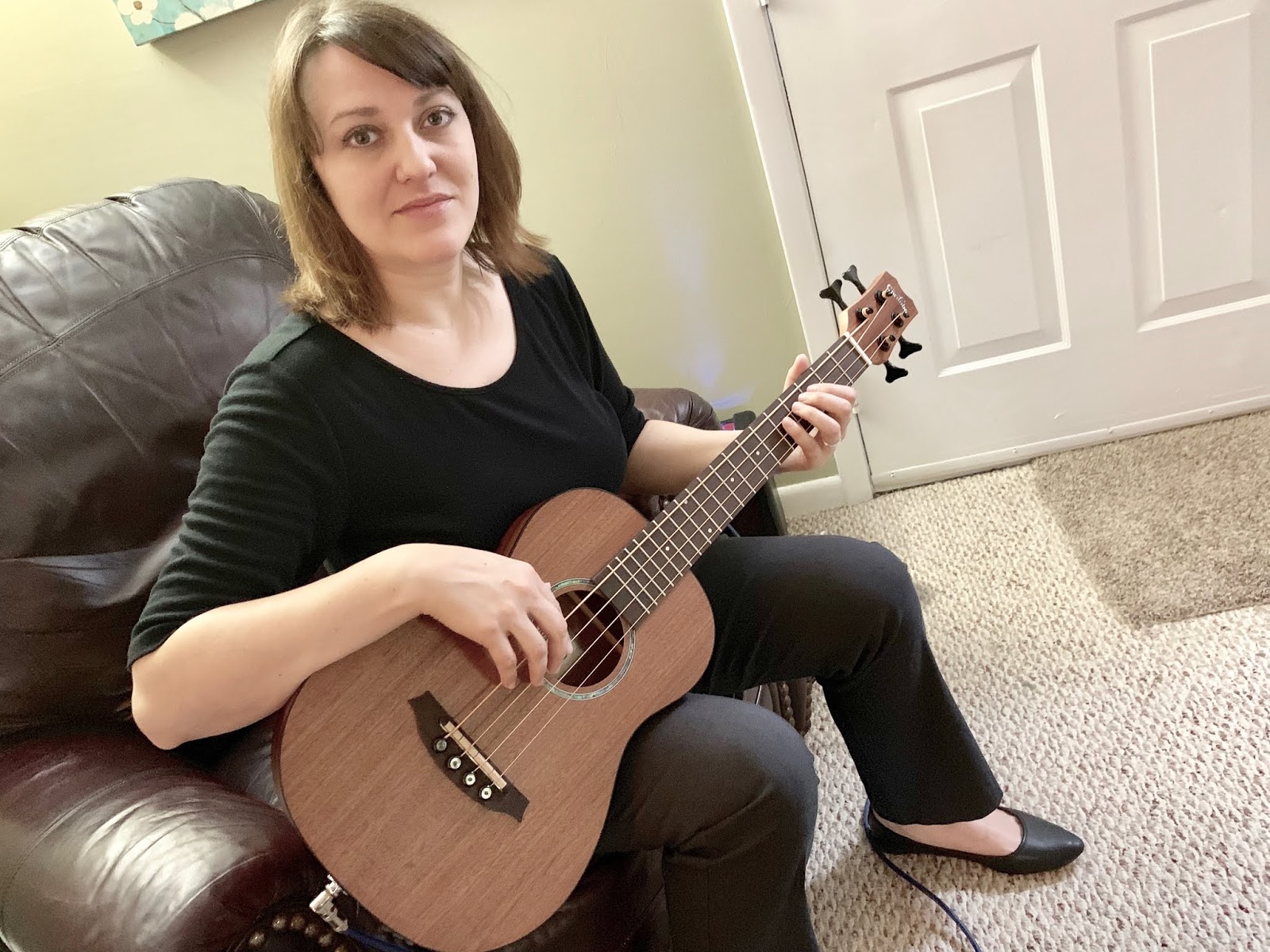
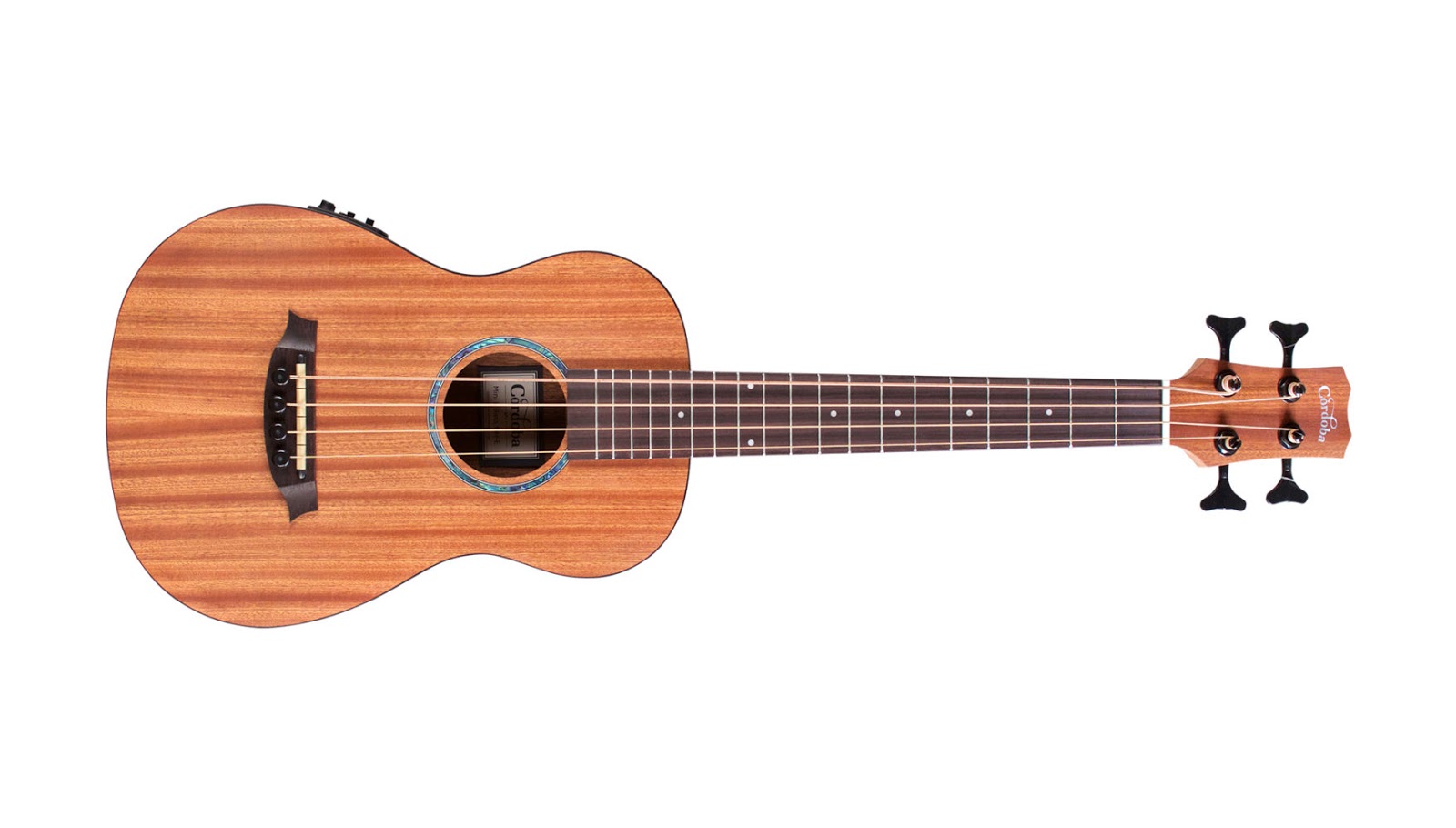
Latest gear: Córdoba Mini ll Bass MH-E


Around 2007, I saw Nathan East playing an acoustic/electric bass guitar at the Crossroads Guitar Festival for the blues song, "If I Had Possession Over Judgement Day" with Eric Clapton. I hadn't ever tried one of these basses, having only played electric and upright bass, so I found a lower line Ibanez model online to try it out. When it arrived, I was more than a bit disappointed. It was big, bulky, and didn't have the sound that I expected from an Ibanez. (That being said, I love Ibanez basses in general--even the cheap ones sound great 99.9% of the time).

So, after only a short period of time, I decided to sell the bass on Ebay...and that was that.

Then, I found the Gold Tone acoustic/electric M-Bass (Microbass) with its rubber Aquila "Thunderguts" strings. I decided on the fretless version of this bass and bought it on a whim. It's super fun to play and ridiculously light. But I don't always want to play fretless, so I felt that I was a bit limited with this bass.


Right before my birthday this year, I noticed that Córdoba had just released an acoustic/electric mini bass. Having owned a Córdoba classical guitar, I knew the quality of even the lower line guitars they produce, so my husband bought me one for my upcoming birthday. I decided on the mahogany version because I lean towards a darker sounding wood...and it was $100 cheaper than the natural spruce option. The bass features an onboard tuner...which is pretty sweet when you consider that it only costs $199.

Sound-wise, the Córdoba Mini ll Bass defies its name. There's nothing mini about the tone or output of this bass. It's great for practicing without an amp...and works just fine in a band setting plugged into an amp. Even with the smaller body, the mahogany body resonates just enough to know you're playing an acoustic.

It doesn't come with a bag/case, but I bought a Córdoba classical guitar padded gig bag for a 1/2 or 3/4 size guitar and that works perfectly. (I think it was around $50).

Full specs for this bass can be found HERE.


Monday, April 29, 2019

New short-scale bass: Fender Classic Player Rascal (Made in 2014)


After over two weeks of moving (not to mention dozens of trips to the dump, donation store, and storage unit), we are finally settled in our new (temporary) digs--which means I can get back to real life--and blogging. 
Last Saturday, we decided to make an impromptu trip to the Shoals Guitar Boutique in Muscle Shoals, Alabama-- a cool guitar boutique about an hour away from our home and right up the street from the legendary FAME Recording Studio. We met the super cool and friendly owner, Don Parker, right after he opened the shop several years ago and we do our best to get up there for visits whenever we can.As usual, I had no intention of buying anything. I just needed a break from the past few weeks' intensive physical labors--and looking at new (and vintage) gear seemed the perfect way to recalibrate. We arrived just as members of the Little Rock, AR band deFrance were about to leave. (I found out a few minutes later that the bassist, Connor, had just bought a vintage Teisco short scale bass--something I definitely would've been interested in). Basses are scarce for the most part when I visit the boutique and this time wasn't much different with the exception of three five-string basses, and a couple of 4-string basses that didn't strike my fancy. Then I saw it--a teal-blue ("Ocean Turquoise" is the official color name) short scale Fender bass with Pearloid pickguard. I already owned the only short scale bass that Fender currently produces, so I quickly looked up this Fender Rascal on my iPhone as Brad plugged it into the closest bass amp. (I always get Brad to test run any bass that I'm looking at. Even after fifteen years, I don't entirely trust my judgment when trying out an instrument in a music store). After a brief search, I learned that the Rascal was indeed a short-scale (though the neck was a bit longer than my Fender Mustang) and that they were a limited Custom Shop design run made in 2014. This was the determining factor for me. When a bass is no longer available, difficult to find used, plays great--and a short scale to boot-- I want it. (Plus, I recently sold my Stagg upright electric bass, so I figured there was no reason not to). Brad replaced the strings with some D'Addario Chrome flatwounds as soon as we got home, cleaning up the fretboard and body with our Dunlop guitar cleaning kit, making this bass play and sound sweeter than it did before. I'm pretty convinced that this will definitely be the most versatile bass (with its five-way switch) that I've ever owned--and did I mention that it's a short scale bass? (Yes, I'm a little obsessed with short scales). 

Here are a few links and videos about the Fender Rascal: Fender's description via Sweetwater

Fender Classic Player Rascal Bass Designed by Master Builder Jason Smith (video)

Fender Rascal Bass Review by Premier Guitars (video)Fender Rascal Bass Review by Premier Guitars (article)

Fender Classic Player Rascal Bass Guitar


Fender Classic Player Rascal Bass Features:
  • Custom Shop designed short-scale bass with a wide range of tones
  • Seymour Duncan Lipstick pickups deliver a unique, full-range tone
  • 5-way switch and push/pull volume knob give you seven pickup choices
  • Guild Starfire bridge with barrel saddles provides excellent intonation
  • Shorter scale length plays fast and intensifies harmonics in your tone
  • The compact alder body
  • C-shaped maple neck 
  • Rosewood fretboard

Monday, November 5, 2018

My latest short scale bass: Hofner Violin Ignition Series Bass

A Hofner Violin Bass is one of the few mainstream basses I hadn't ever played in my 15-year bass playing career. I had messed around on a used Epiphone Viola bass at the Shoals Guitar Boutique in Muscle Shoals, Alabama (which is about an hour from my home) a couple of years ago. I'm all about short scale basses since I bought my Gibson SG bass in 2016. Earlier this year, I obtained one of Fender's new Mustang basses--Fender's only short scale bass--and after years of disappointment with Fender, I finally started loving their basses again.

Not only is the Hofner Violin Bass a short scale instrument, but it's also completely hollow-bodied--something I had also never owned before (other than the acoustic basses I've owned).

So, Musician's Friend was having a sale--need I say more? Long story short, I bought one at a killer price, bought a case to match (also on sale) and waited a few days for it to be delivered to my door. I also bought new D'Addario Nylon Tapewound strings to go with it because I read that the round wound strings that come on it are crap.

The bass sounded pretty good out of the box, but I was anxious to get the new strings on it. The strings arrived in a separate shipment, so I had to wait a day or two before I could put them on.

Here's the rub: Standard sized bass strings don't fit Hofner basses. No one says this in the bass description...and it wasn't until after the fact (when I was doing research) that I found out that these basses need special, smaller-sized strings. Bummer. Sure, I can use the tape wounds on my other short scale basses (I ordered short scale strings because the Hofner violin bass is a short scale bass), but it sucked that I had to reorder special strings after the fact.

Several days later, the new strings (LaBella flat wound strings for the "Beetle Bass") arrived and I finally got to hear my bass with quality (flat wound) strings on it. It sounds great, to say the least, and because of its lightweight body, it has become my go-to bass for quick practices in the living room (where I keep my little 10-pound Vox bass amp).

This is a cool little bass that sounds and plays great. You'd never know it was below the $400 range. Usually, you get what you pay for with musical instruments, but as I've found with this bass, there are exceptions to every rule.

See this bass's specs on Hofner Guitars website.

See pictures of my Hofner Violin bass here.


Friday, September 7, 2018

Trying new strings: D'Addario XL Nylon Tapewounds

After playing with flatwounds for over 7 years, I finally decided to try out some nylon tapewound strings after reading about them and hearing good things from a Guitar Center associate. Since D'Addario is my go-to for strings, I ordered their XL Nylon Tapewounds (medium gauge) to try out on my new Fender Special Edition Deluxe Precision bass.

Being a creature of habit, it takes a lot for me to try something new (especially when strings are close to $40/set), but I'm glad I did in this case. These strings were awesome from the get-go. New flatwound strings always seemed to take a few weeks to adjust to, but these tapewounds were comfortable from the start. They're lightweight enough to hear note definition while retaining a vintage "thumpy" sound --like that of an upright. My fingers can fly up and down the next with ease (I do a good bit of sliding), and there's zero resistance--yet, they're not so slick that I lose control. 

I can't say enough about these strings...mostly because they're perfect for the style of music that I usually play. I haven't tried them with a pick, though, because I play pizzicato 100% of the time. 

Oh, and they're black--which looks super cool.


New (super lightweight) Amp: Vox VX50 BA Amp

Back when I was hauling gear around three times a week, there were few affordable lightweight options. I loved the Genz Benz I had, but after I stopped playing so much, even that seemed heavy in addition to my other gear that I carried from place to place. The best I ended up finding was an Ampeg Micro-CL 100 watt amp around 2010. It weighed at least 30 pounds and was in two pieces...not exactly easy to carry for someone of my stature.

I considered a Fender Rumble a year or so ago, but then I found the Vox VX50 bass amp...weighing in at just under 10 pounds. Since I still had the Ampeg, I didn't want to drop too much money on essentially what would only be a practice amp. The Vox was only $229.00. After watching (and reading) many reviews, I added it to my cart and waited for Fed Ex to deliver.

Considering its speaker size, this little Vox really delivers. I can easily jam with an electric guitar and full drum set and still be heard at half volume. I haven't tried it in any other setting, but for my purposes, this amp is perfect. My amp is no longer the heaviest piece of gear I'm carrying around. And as a bonus...it has built-in compression and drive options.


Amp specs are below.


OVERVIEW
Smooth, rich bass tone that's easy to take wherever you play.
The VX50 BA offers 50W of smooth Vox bass tone for live or studio performances. The highly portable combo features a single with a 4-band EQ for thorough-yet-simple tone shaping, plus a built-in compressor to keep things tight and punchy. The cabinet construction is also optimized for low-end projection, so you're sure to sound great anytime.

The VOX VX50 BA is a compact, lightweight and cutting-edge bass amplifier with an impressive 50 watts of output power and rich, deep bass tone courtesy of the Nutube-equipped pre-amp. Beyond its impressive sound, the VX50 BA provides players with a 4-band EQ, as well as on-board compression and overdrive for dialing in tight, punchy tones. There's also a full assortment of input/output jacks for connecting your headphones, media player or PA system. Weighing in at only 9.9 lb., the VX50 BA is a fully-featured bass amp that's perfect for the bassist on the go.

The compact and lightweight VX50 BA features a VOX original 8 in. speaker, a unique bass reflex structure that ensures ample power and rich low-frequency reproduction, and warm vacuum tube sound courtesy of Nutube. There's also a 4-band EQ that allows detailed sound-shaping, a compressor effect that's indispensable for bass, and an overdrive effect that provides everything from subtle grit to high-gain overdrive.

Also provided are a full complement of input/output jacks, including an aux. in jack, headphone jack and a direct out jack for direct connection to your PA system. Aesthetically, the VX50 BA sports a red color scheme, a traditional VOX vertical logo, and a metal grille for a distinct and edgy look that's sure to stand out on stage.

FEATURES
·     Ample output, and a speciallyoptimized bassreflex structure to reproduce rich lowfrequency sounds
·     Fourstage EQ allows the bassist to precisely shape their sound
·     Compressor lets you enjoy a tight, punchy sound


SPECIFICATIONS
·       Power: 50W
·       Single channel
·       Single input
·       Speaker: 1x8 Vox
·       Controls: 4-band EQ, compressor, overdrive
·       Built-in compressor
·       Aux. input
·       Headphone output
·       Metal grille
·       Bass-reflex cabinet structure
·       Weight: 9.9 lb.
-->